

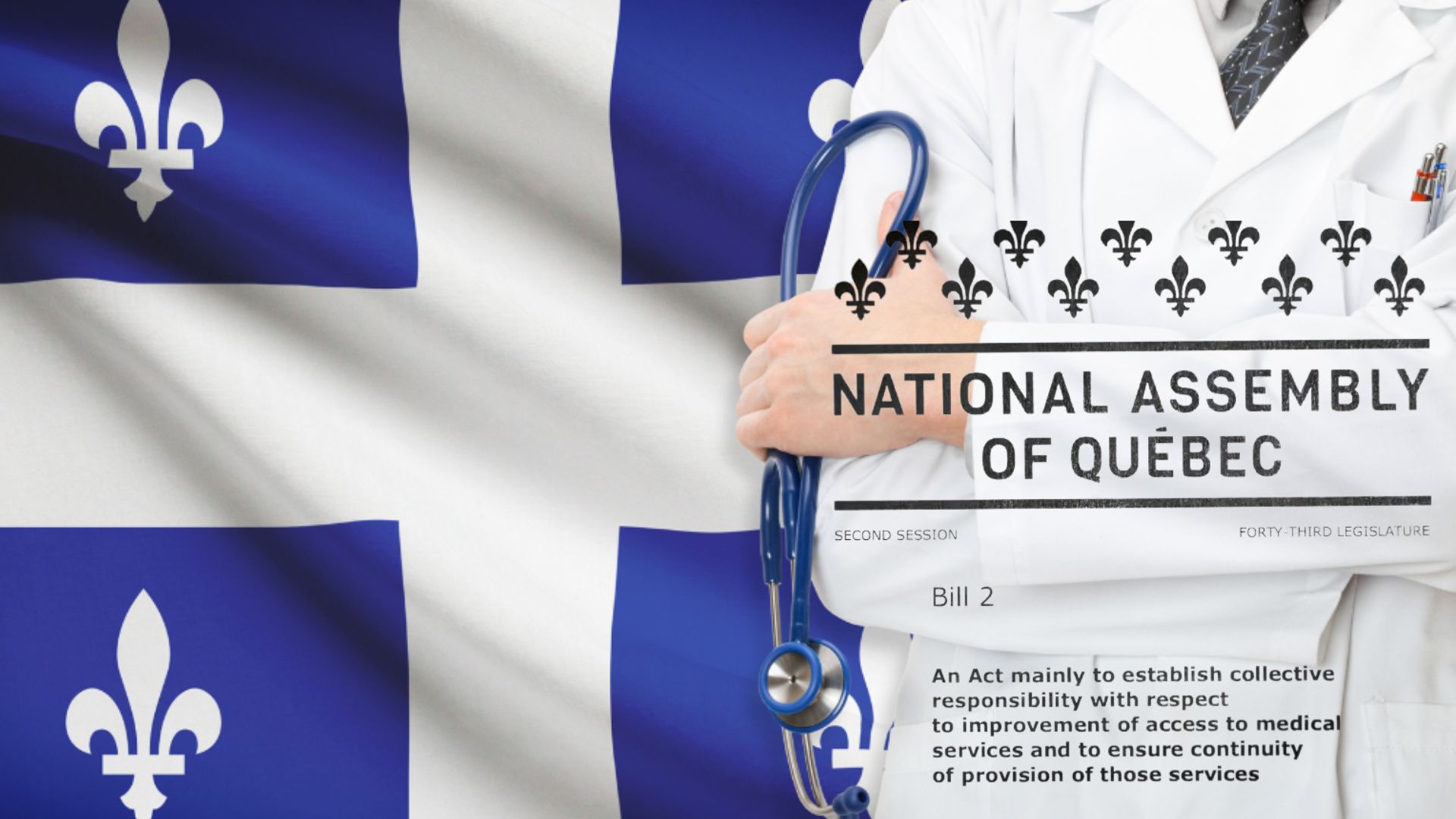
On October 25, Québec’s government rolled out a new law called Bill 2, hoping to fix the province’s growing problems with long wait times and poor access to family doctors. They’re aiming to force changes in how doctors deliver service by tying pay and responsibilities to new targets. Many physicians say the law misses the point and could backfire on patient care.
Bill 2 is a law that imposes a new contract on physicians in Québec — but not one they’re happy about. Under the law, about 10% of a doctor’s pay now depends on meeting government-set performance targets, like how fast patients get seen in the ER or how many surgeries get done each year. The government says it’s a needed push because too many Quebecers still don’t have a family doctor or are stuck waiting forever for care. To fix that, they’re tightening rules and holding doctors more accountable. The bill also cracks down on collective action — if doctors protest or refuse the new system together, they could face fines of up to $20,000 a day. Many physicians say that’s unfair, arguing the government’s just dumping a broken system on their shoulders without giving them the staff, tools, or support to make it work.
Doctors across Québec aren’t taking the new bill lightly. Medical groups and physicians have been protesting loudly — some even taped their mouths shut in front of the provincial legislature to show how the law silences them. On November 9th, according to the Federation of General Practitioners of Quebec, more than 12,000 doctors, med students, and their families filled the Montreal Canadiens’ arena, calling for the government to scrap the law.
The Canadian Medical Association and other groups have also spoken up, warning Bill 2 could seriously harm the healthcare system and urging the government to talk things out instead of forcing changes through. The government says it’s open to more discussions, but many doctors say the damage is already done and trust is broken.
Some people are pointing to Nova Scotia as an example of how things could be done better — with more collaboration and less confrontation. Many doctors also feel their professional autonomy and collective bargaining rights are under threat, because the law bypasses negotiation and imposes terms — and penalizes public dissent. There’s concern the law will accelerate doctor departures from Québec, worsen morale, intensify physician shortages, and ultimately leave patients worse off. Meanwhile, Ontario’s Premier Doug Ford is seizing the moment, openly inviting Québec doctors to hop the border and work there instead.


